
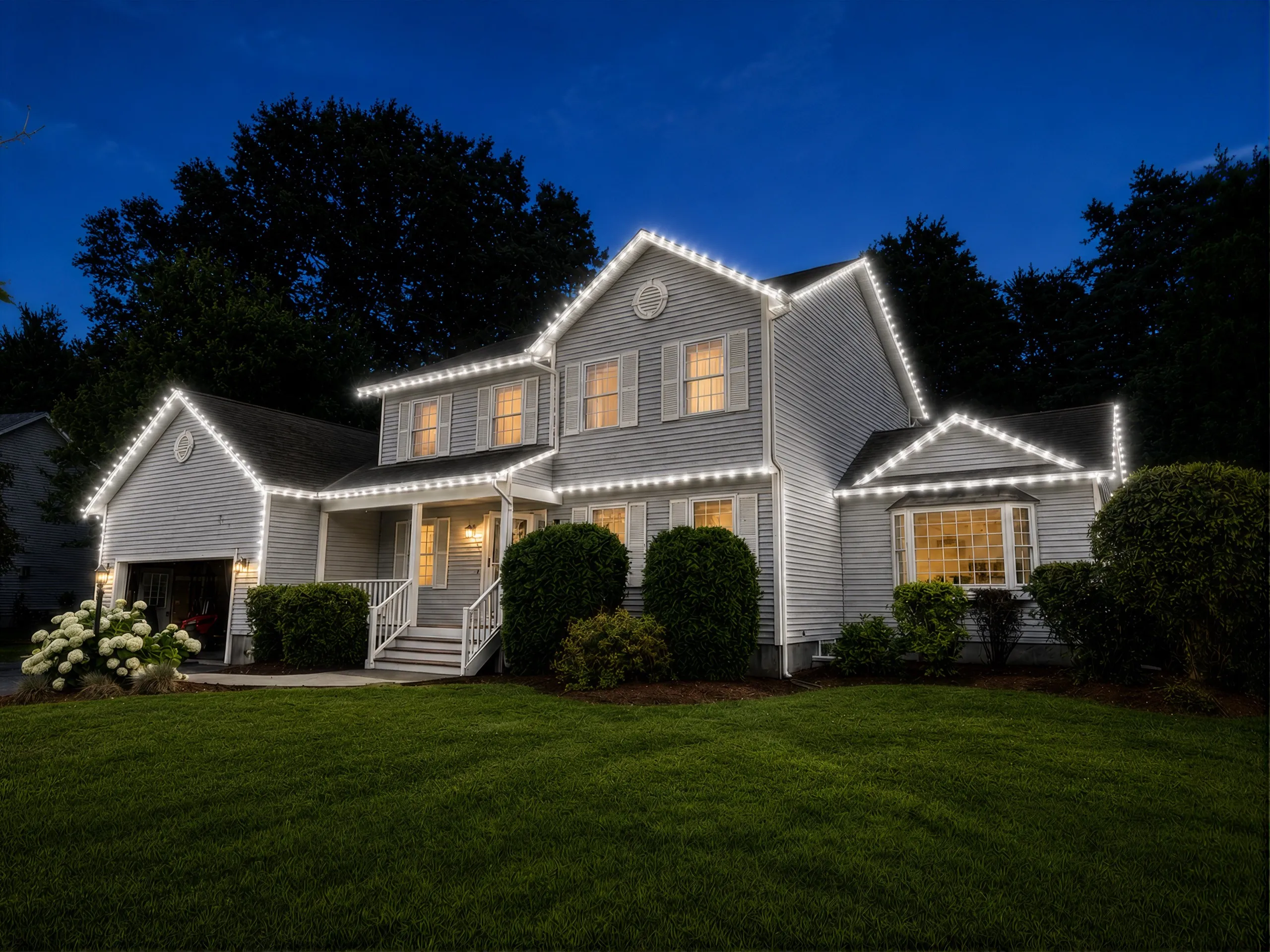
1. Outline the roofline
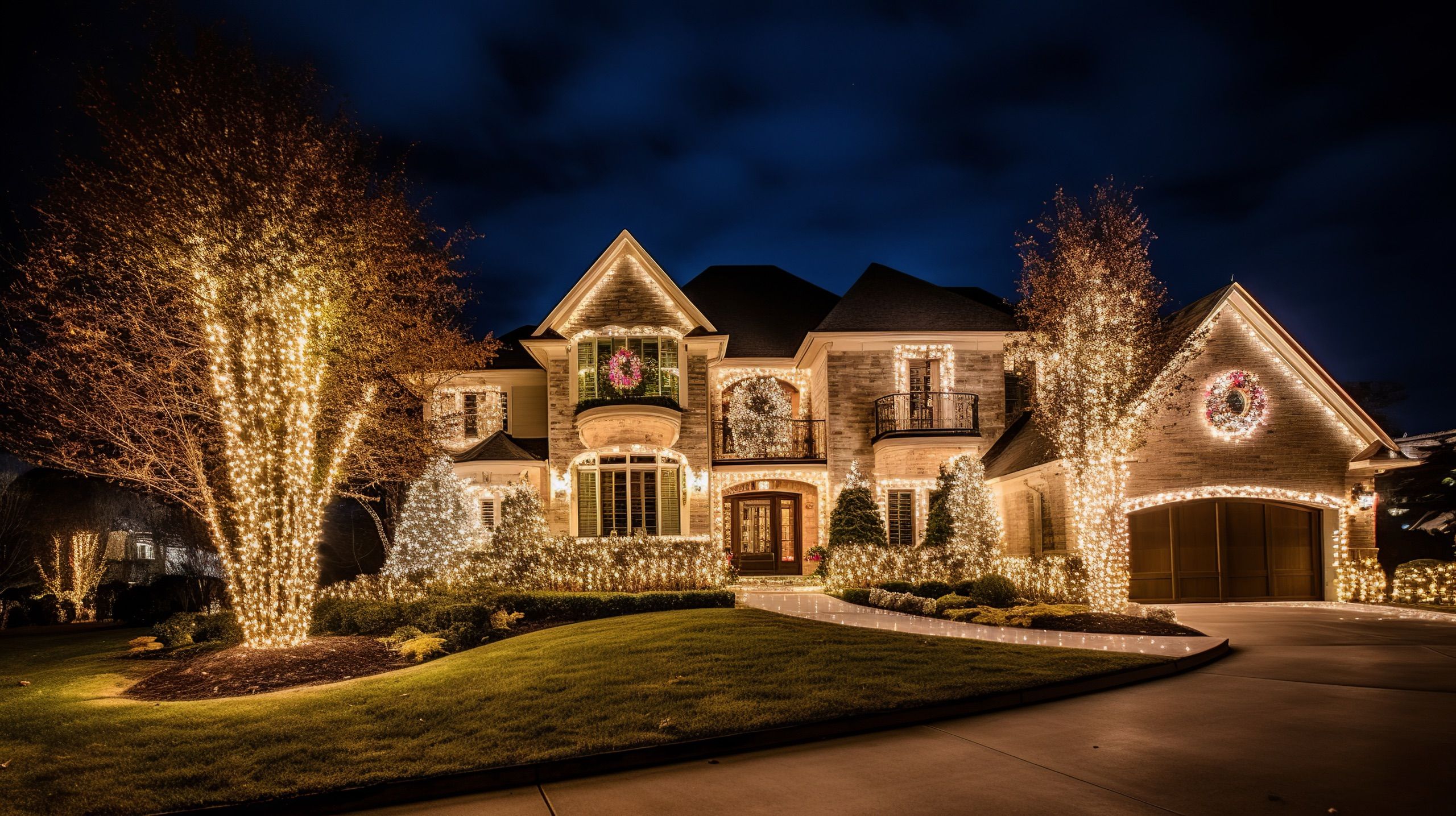
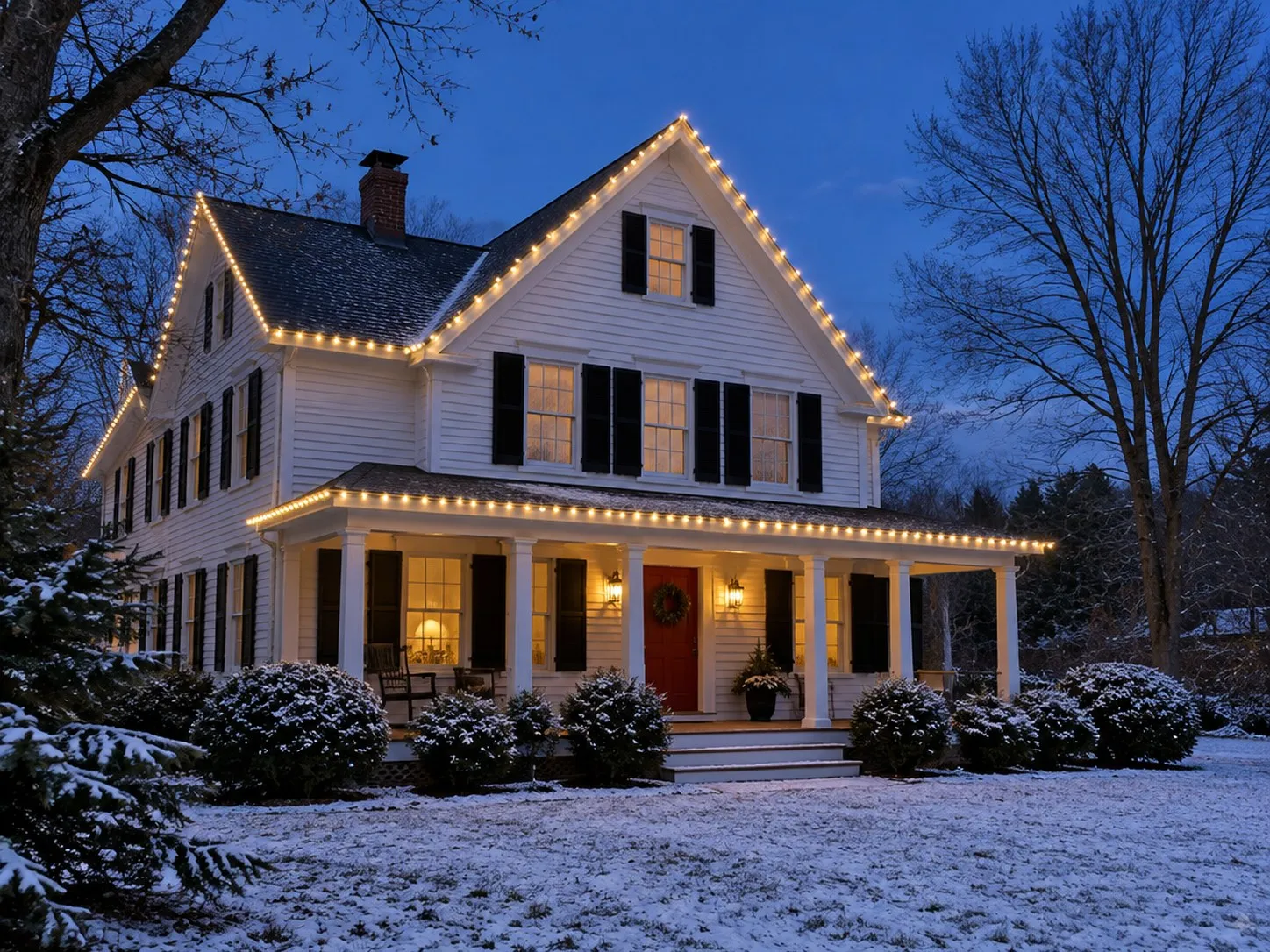
The one idea that works on every house. C9 bulbs about a foot apart along every eave you can see from the road, in a straight line, cut to the length of the run so there is no slack loop hanging at the corner. Done in one white, on its own, it is a house nobody will argue with. C7 vs C9 explains why the bigger bulb belongs up here.
2. Light the peaks and gables
On a two-story house, or any house with a gable facing the road, the peak is the second line. Run the lights up both sides to the point and the house gets a shape instead of a stripe. Light the peaks that face the road. The ones around the side do not show and cost the same.
A Cape with dormers is the Vermont version of this. Light the main eave and the dormer peaks, and leave the dormer sides alone.
3. Wrap the trees
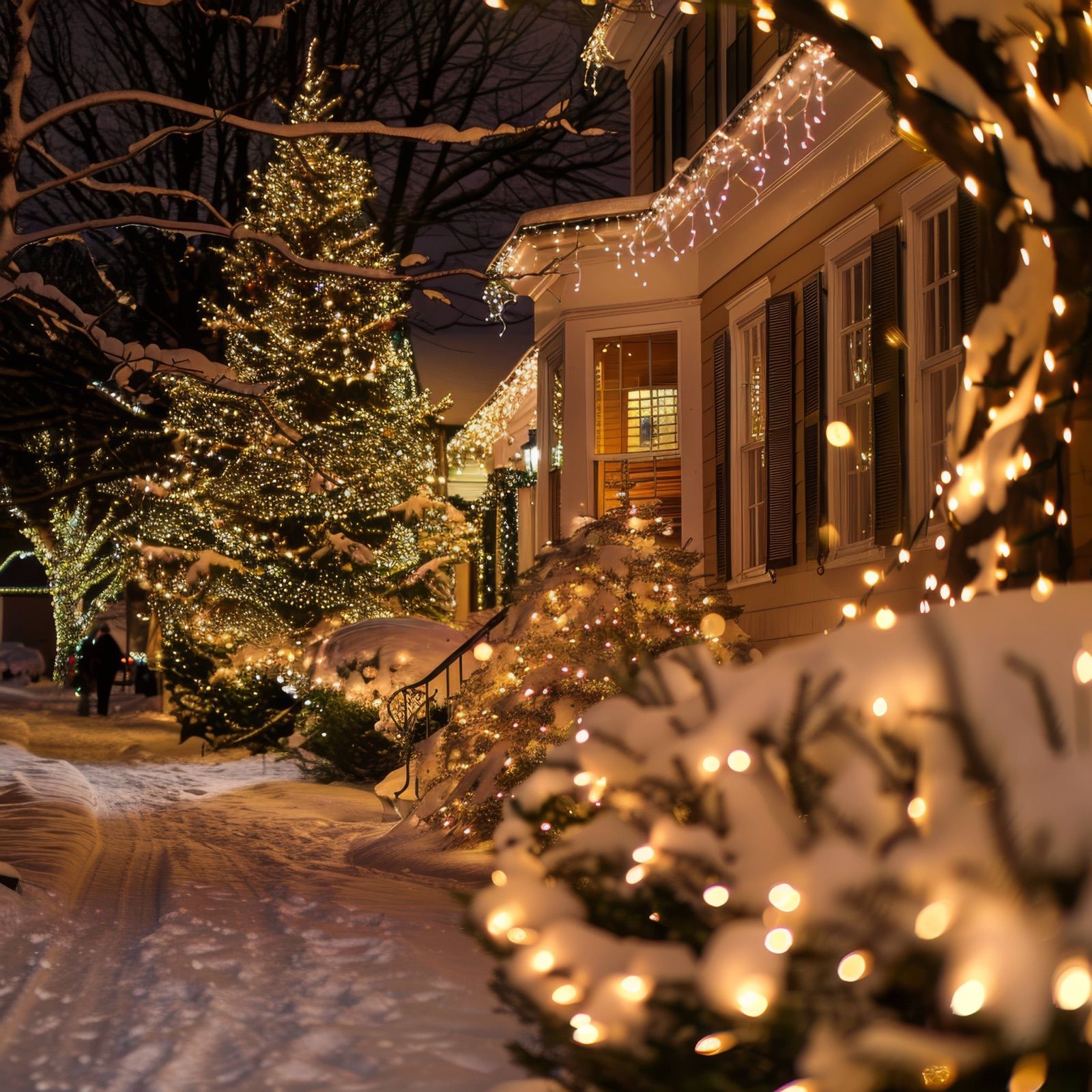
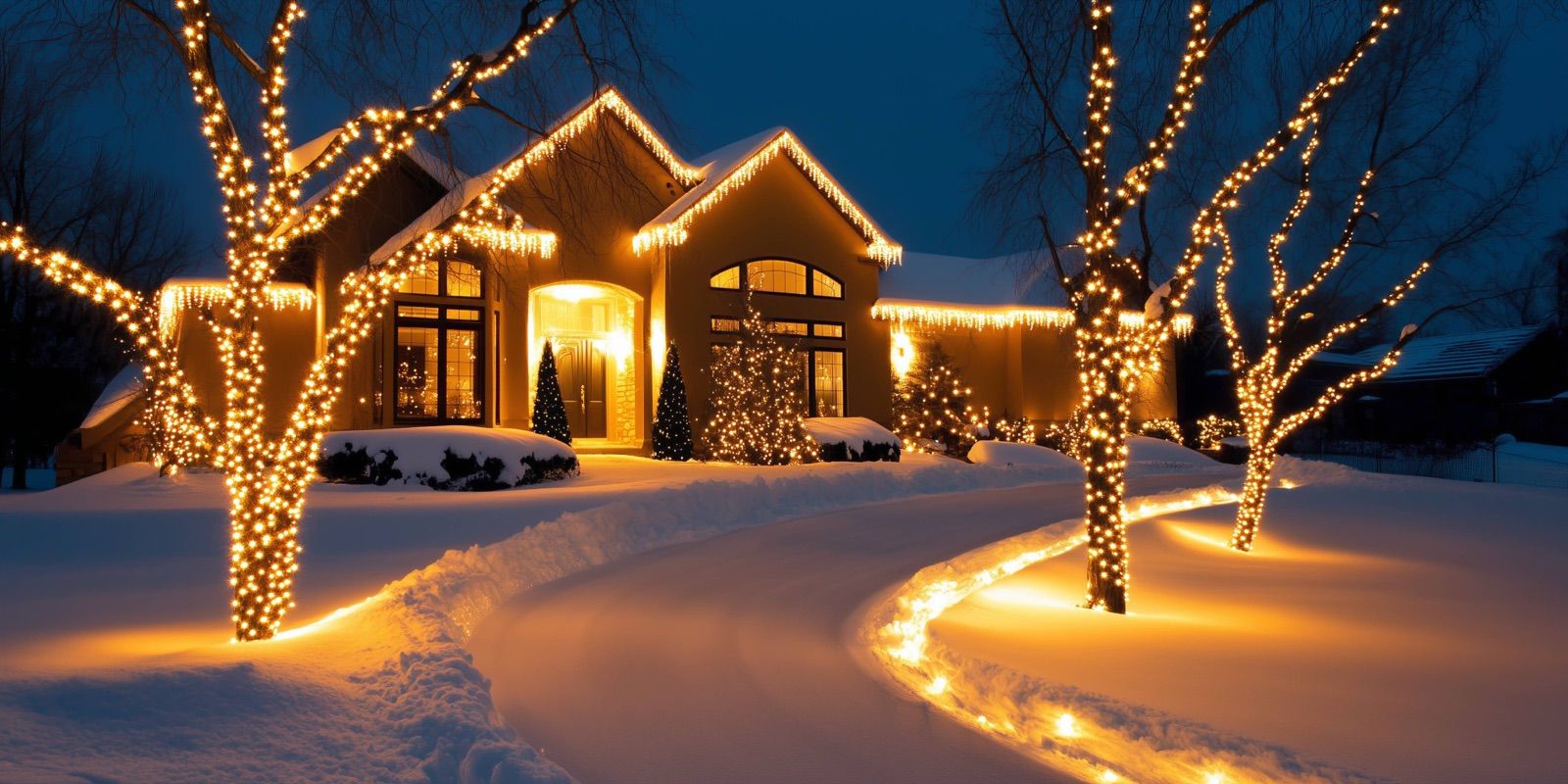
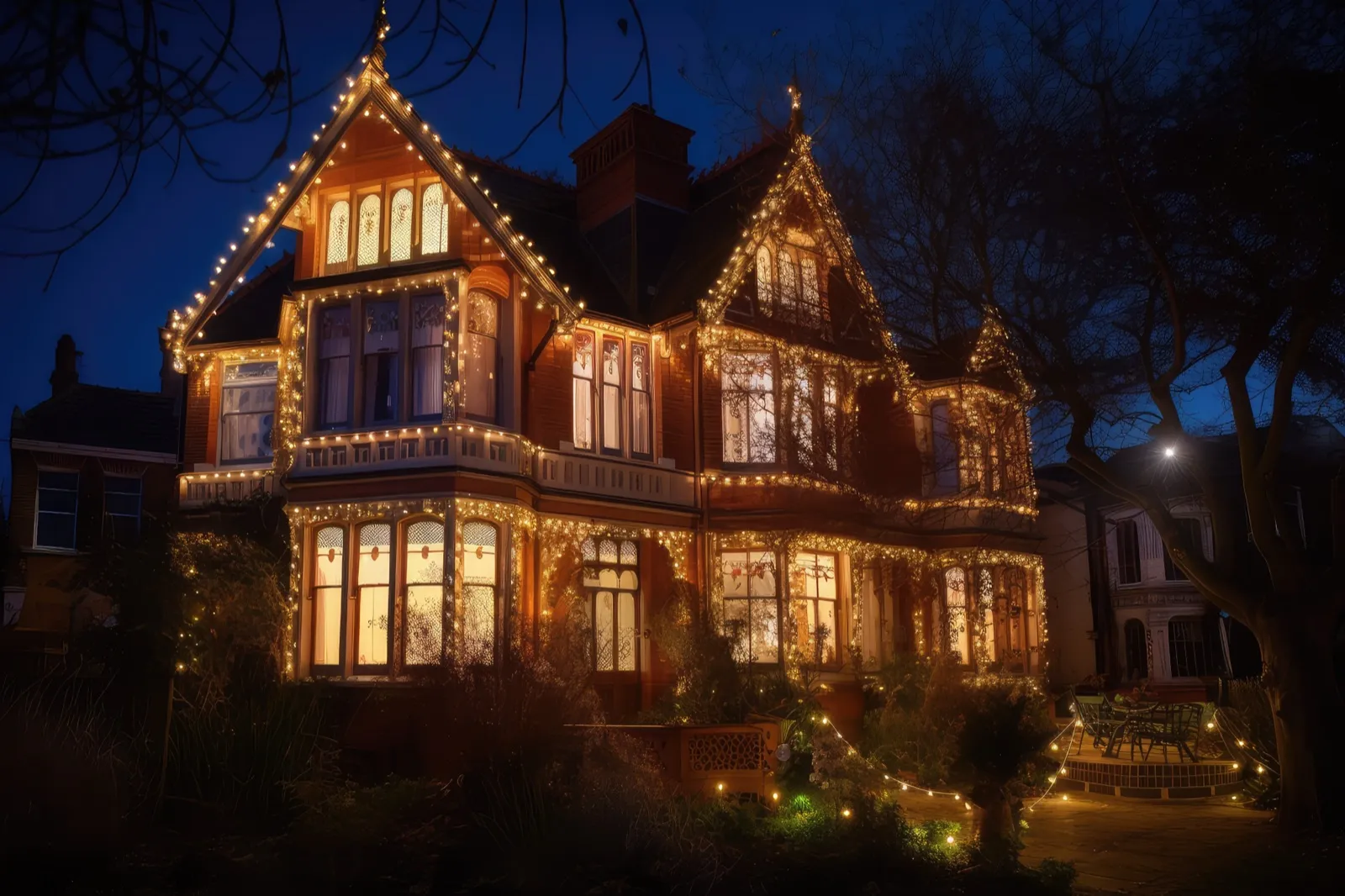
Mini lights spiraled up the trunk from the ground, and out along the main limbs if the tree is worth it. One wrapped maple in the front yard does more than a second color on the roof, and in snow a lit tree throws light back onto the ground around it. If you want a second color anywhere, the trees are where it goes.
4. Columns and porch posts
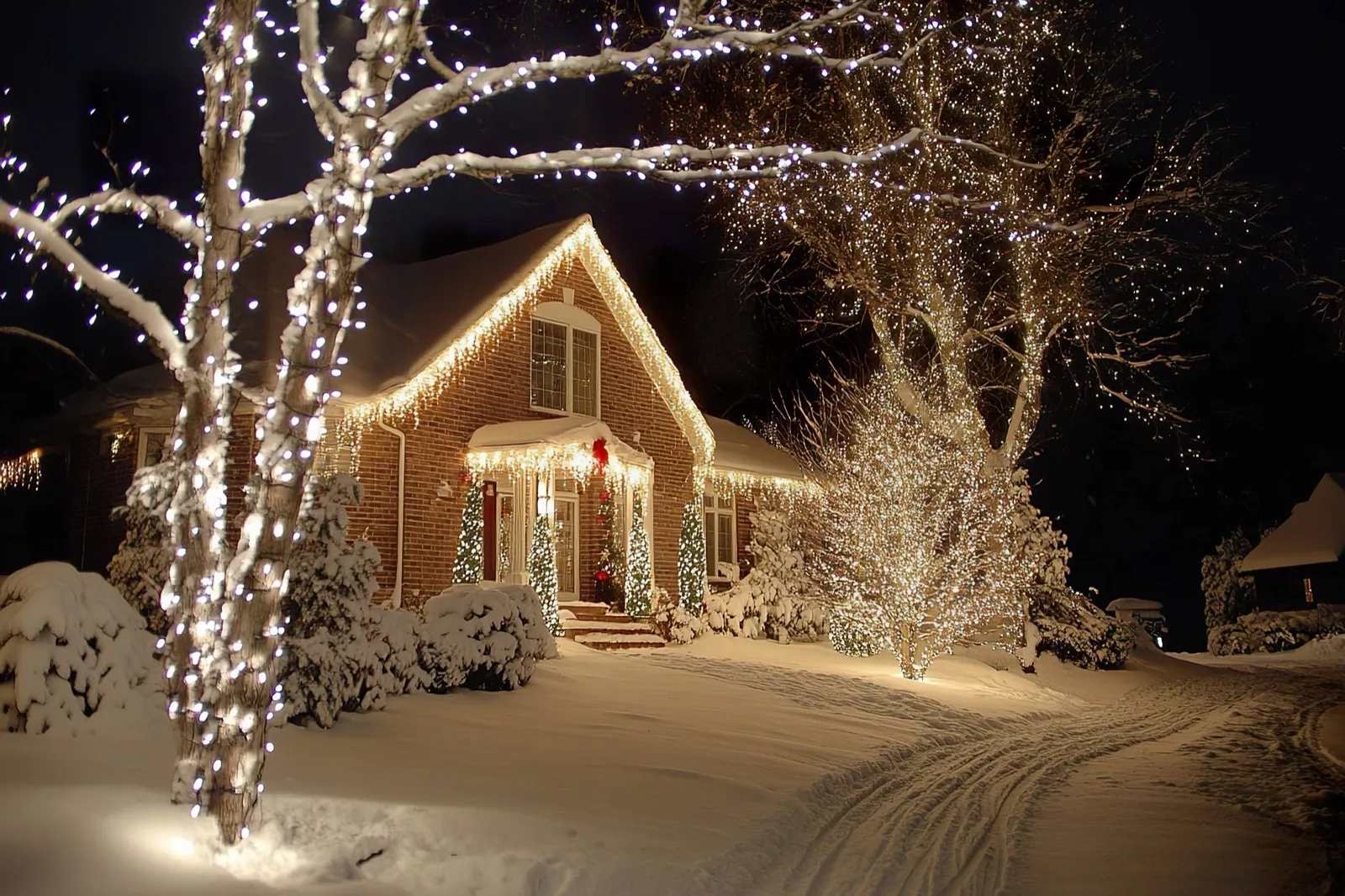
Run a line straight down each column, or wrap it in a slow spiral, and carry the same lights along the top of the porch railing. The porch is seen from ten feet away, so this is C7 work, not C9.
5. Line the walkway
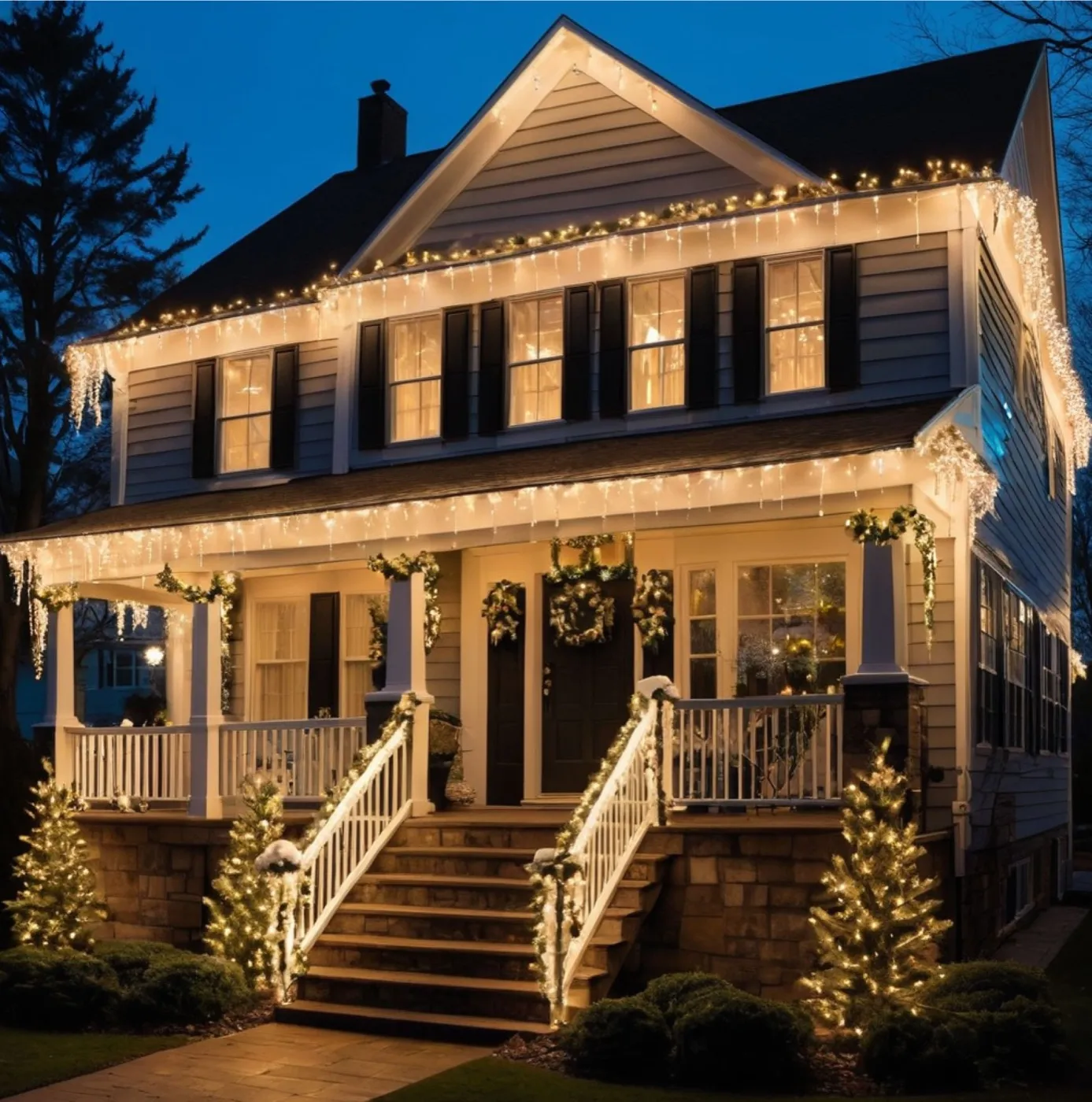
Stake lights along the path to the door or the edge of the driveway. Put them where the shovel and the plow do not go, because the first real storm buries anything in their way.
6. Frame the windows and the door
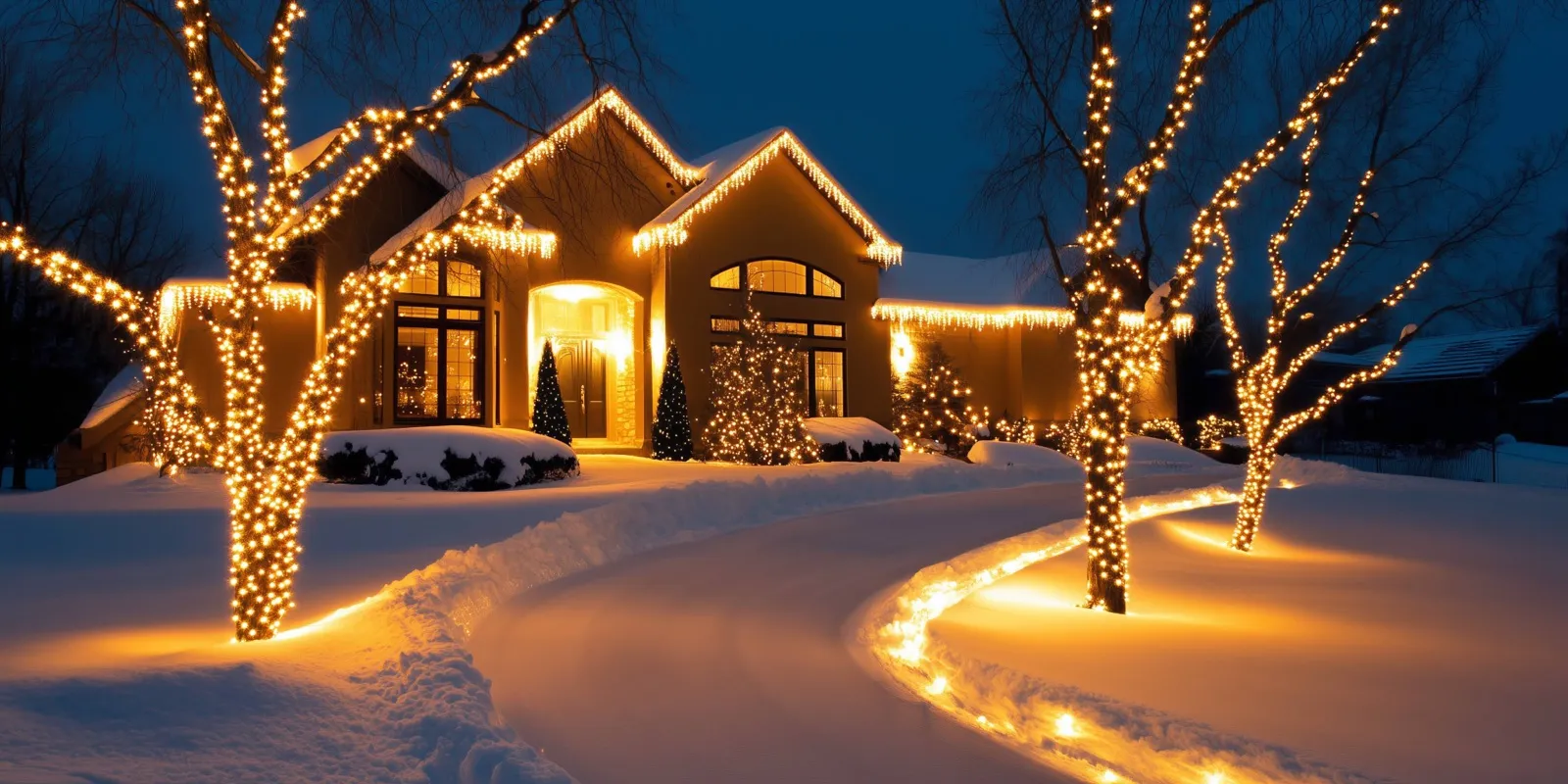
Mini lights or C7 around the window frames and the front door. This is the idea for a small house, or a condo with no roofline of its own to speak of. It reads at eye level, which is where people on a sidewalk are looking.
7. Wreaths and garland, lit
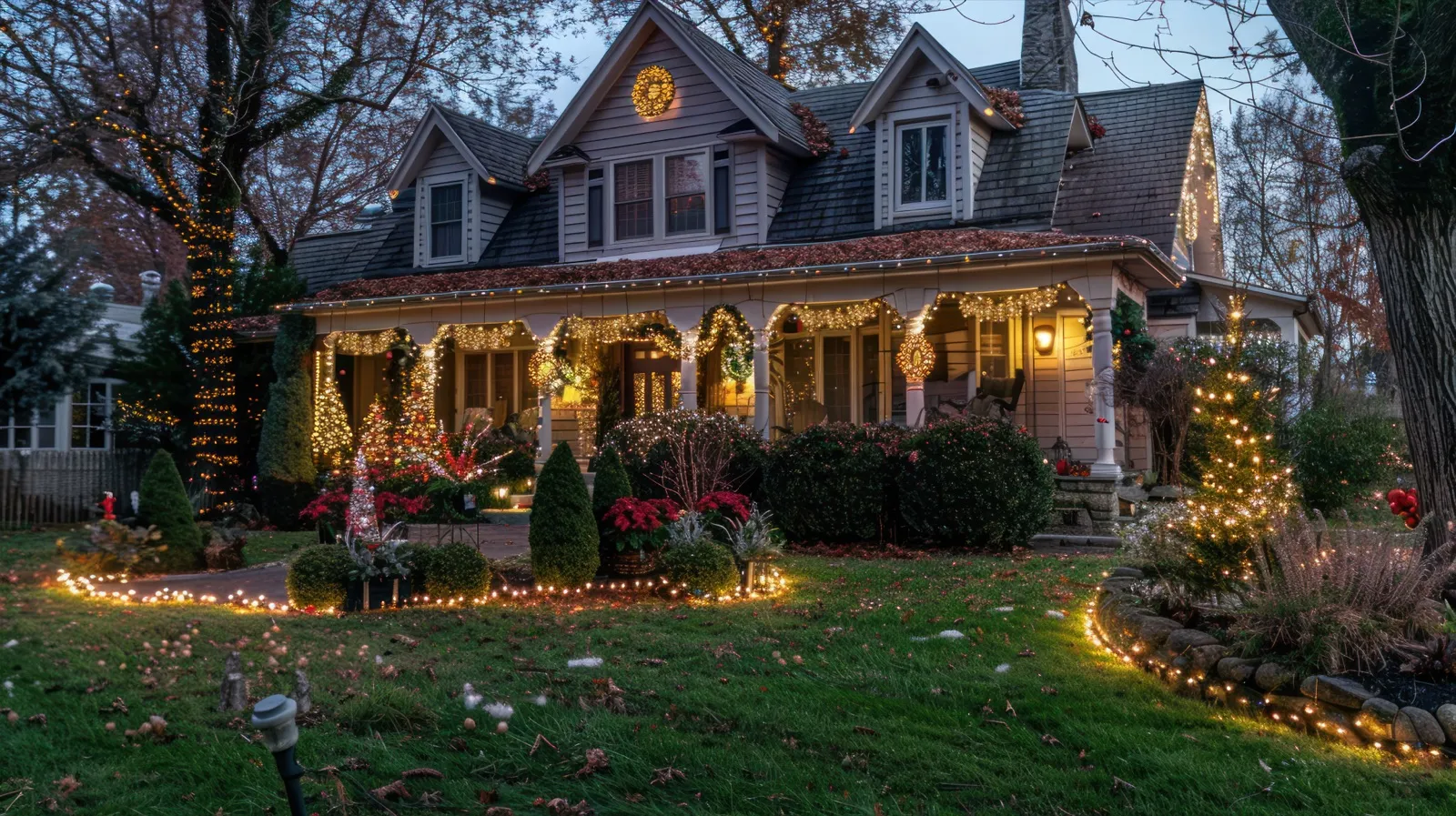
A lit wreath on the door, one on each front window, or one big one on the gable. Lit garland along the porch rail does the same job as a light line with more to look at up close.
8. Pick one white and stick to it
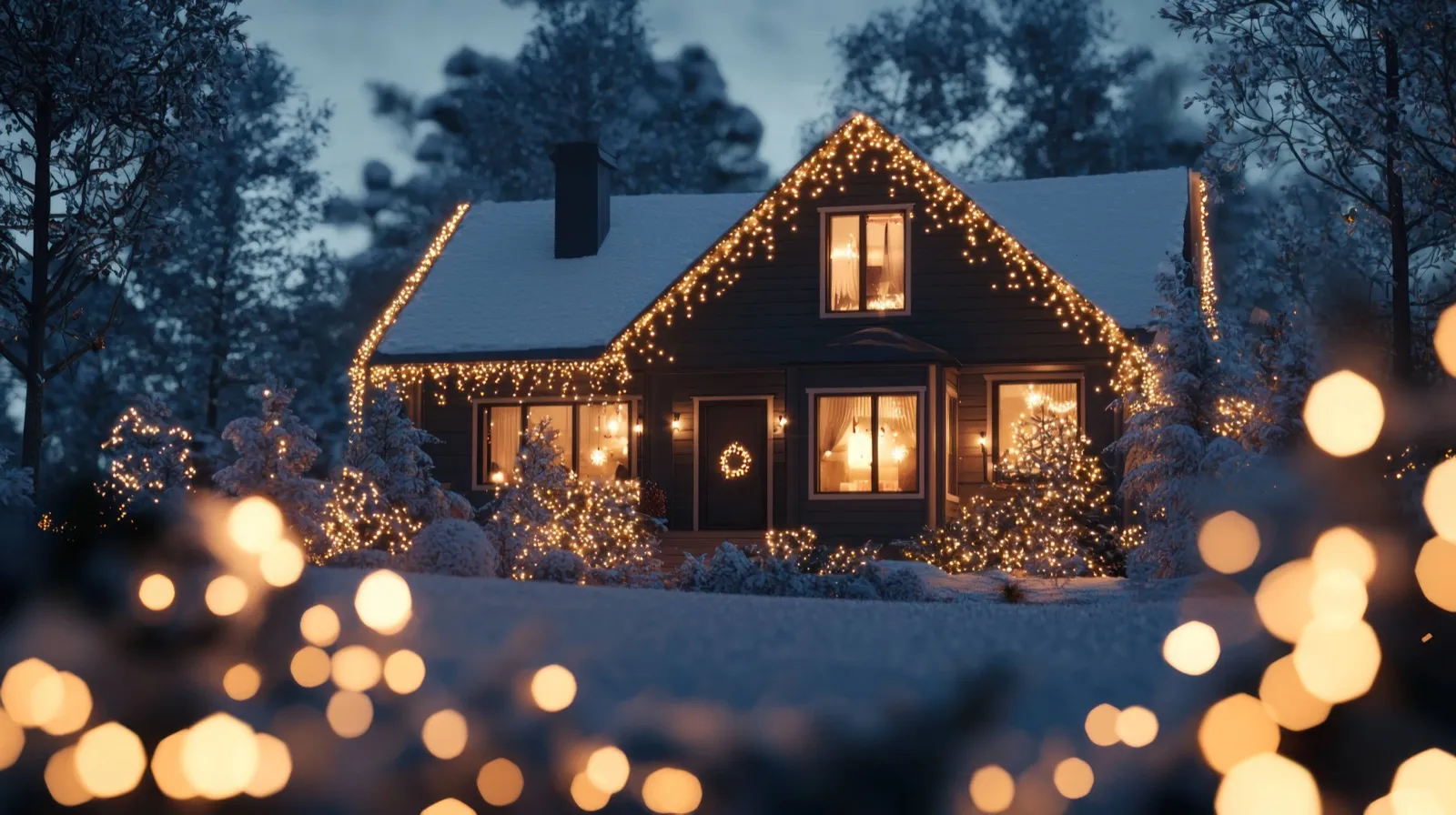
Warm white glows gold and suits wood, brick and warm paint. Cool white is crisp and slightly blue and suits white, gray and blue siding, and it looks like part of the snow. Either is right. Mixing them on one house is the mistake. Warm white vs cool white goes through how each one looks in a Vermont yard.
9. One accent color, in one place
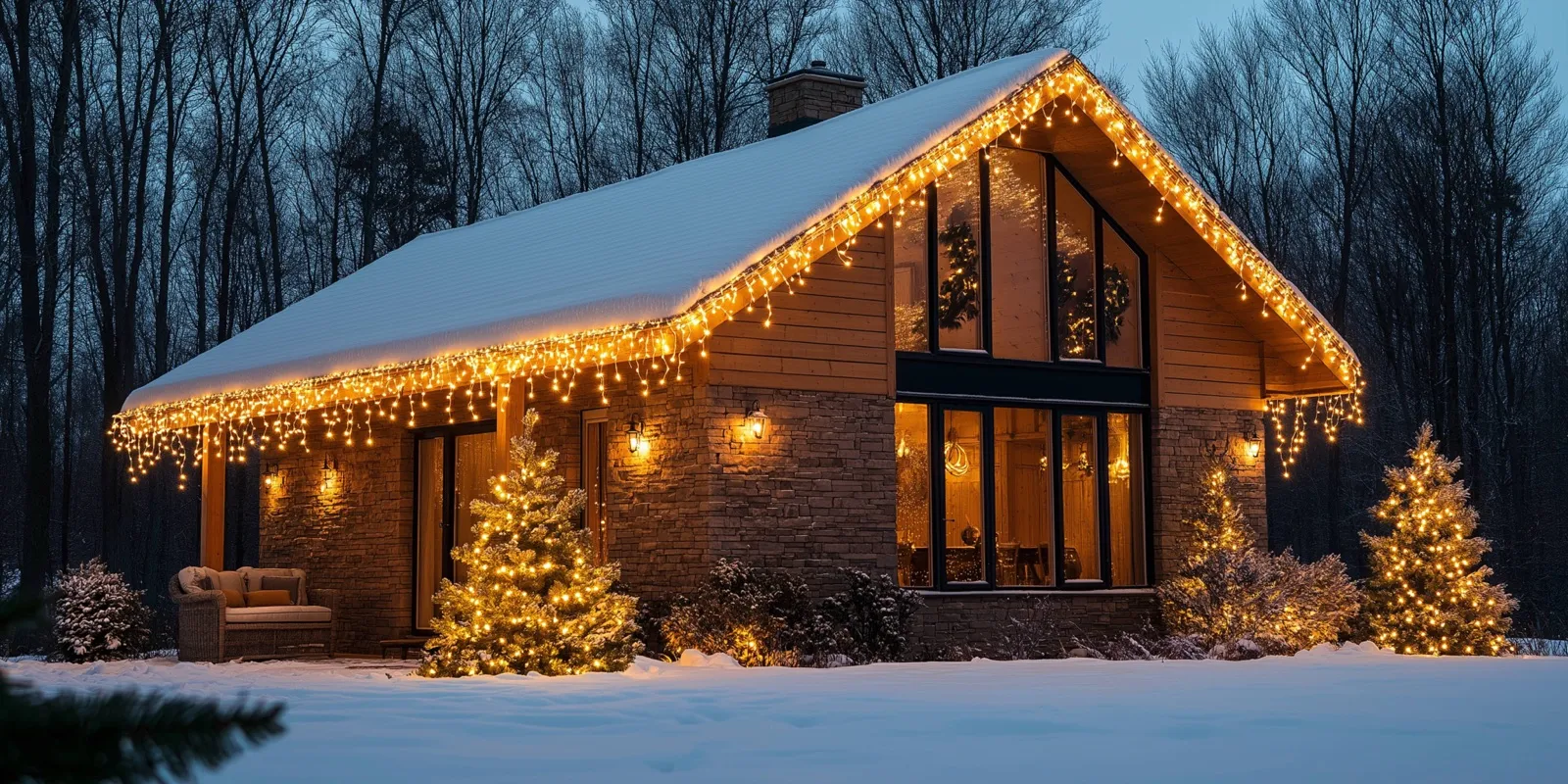
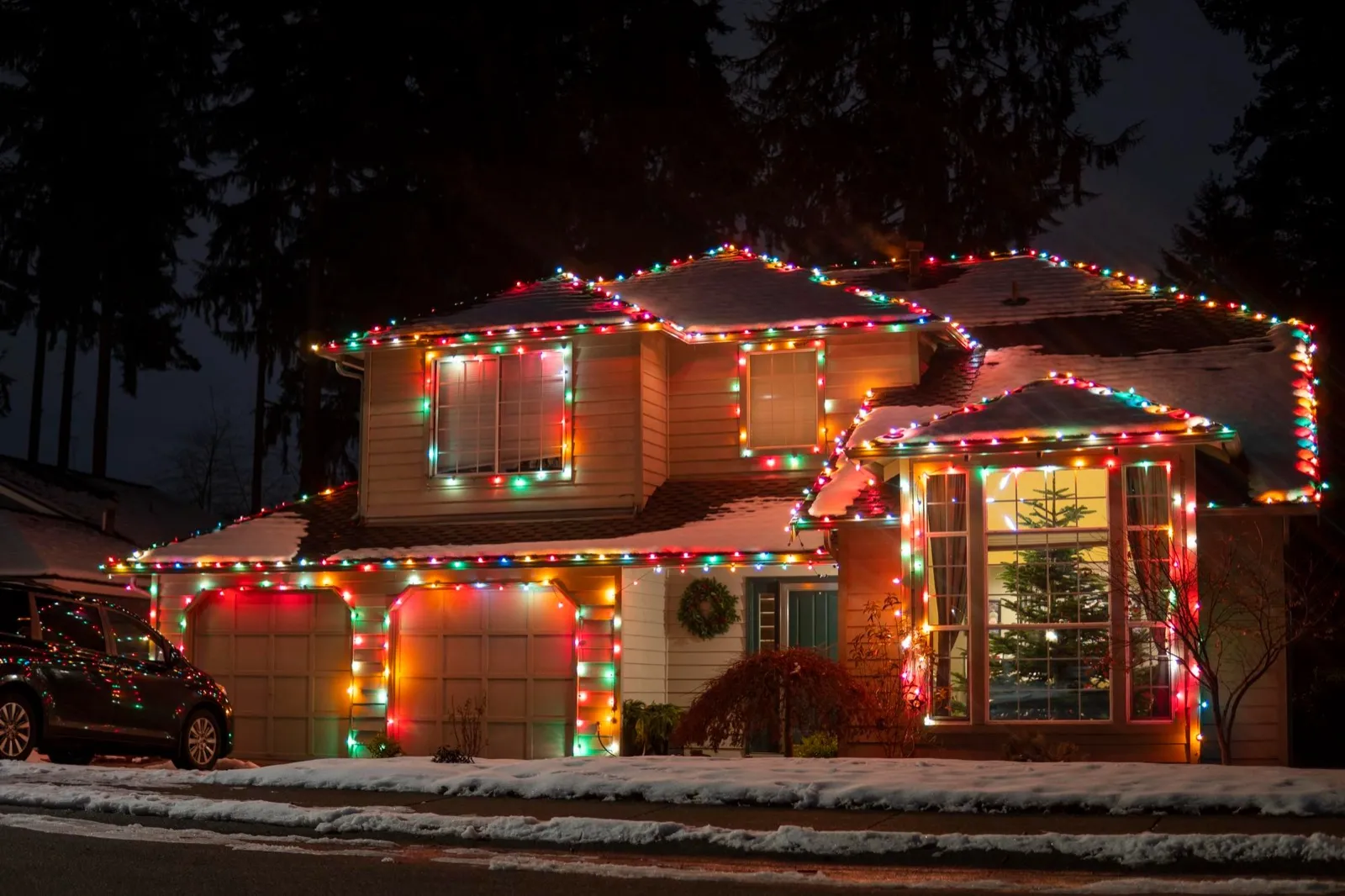
If you want color, give it one job. Red on the porch rail. Green in the trees. A colored roofline on the garage wing and white on the house. A fully multicolor roofline is a real look and a happy one, and it works best when it is the only thing lit, so nothing competes with it.
10. Leave them up
Permanent Christmas lights stay on the house all year and are switched on for the season, so the ladder happens once. The same lines, the roofline and the peaks, with no November install and no January takedown. Custom permanent lights covers what we install.
What has changed, and what has not
Two things have changed since the old photographs of lit houses. LED has replaced incandescent nearly everywhere, so a roofline of C9 bulbs no longer runs the meter or the risk of a hot bulb on a dry shingle, and warm white LED now copies the old glow closely. Permanent lights have become a product of their own. The looks themselves have not changed. A straight roofline in one white is the same idea it was in 1955, and it still stops people on the road.
If you are doing it yourself
The look depends less on the idea than on the execution: measured runs, lights cut to length, clips instead of staples. How professionals hang Christmas lights walks through it. If the roof is standing seam, read Christmas lights on a metal roof first, because nothing goes through the panel.
If you would rather see it on your house
We design for the house in front of us, cut the lights to fit it, and put them up in the colors you choose. The service page shows what is included.